
Last updated November 16, 2026
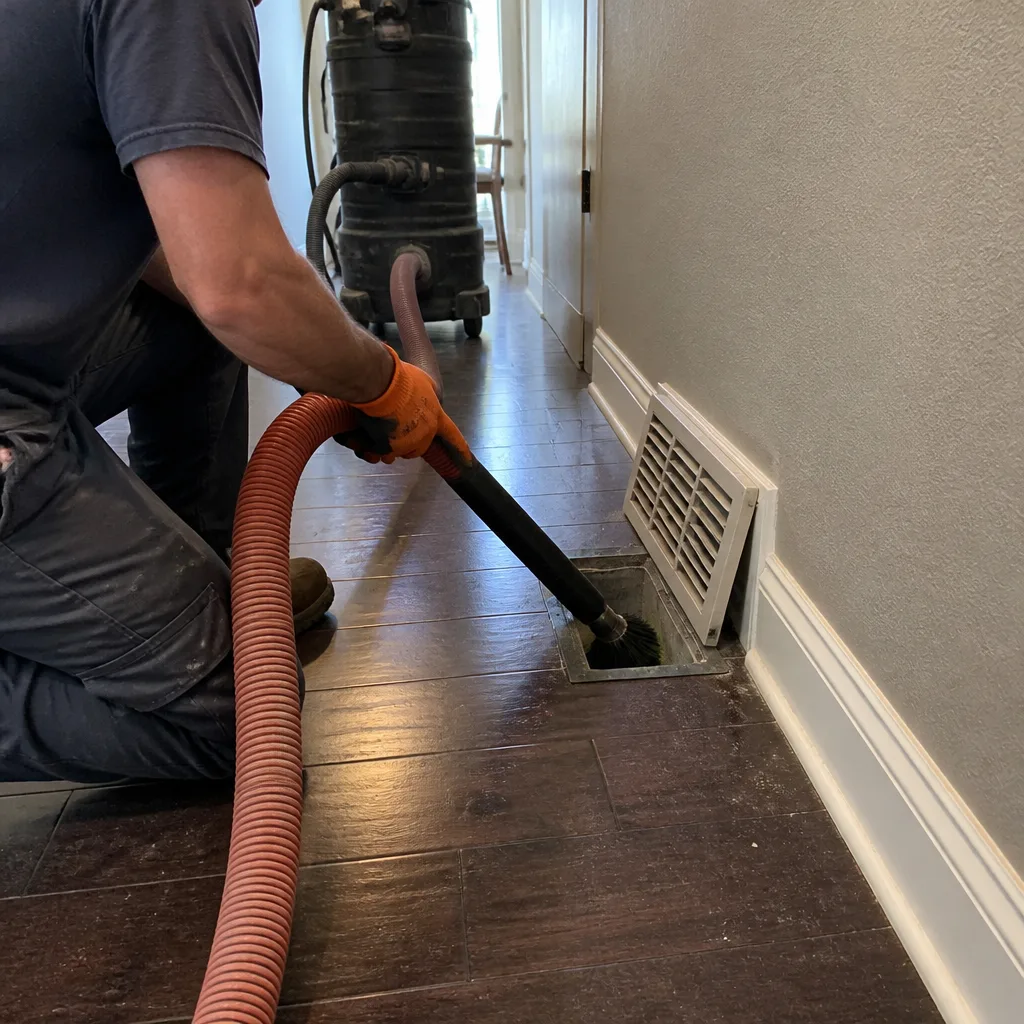
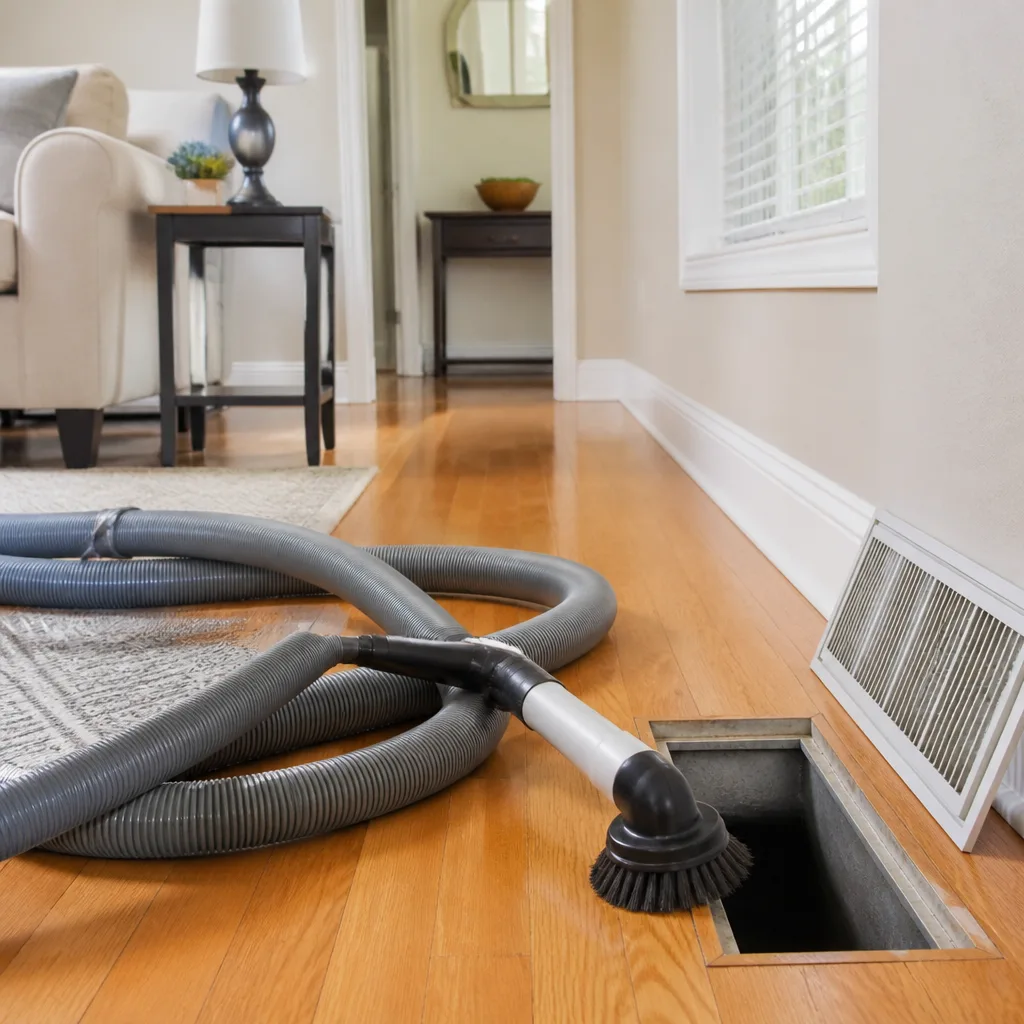 Whole-home duct cleaning
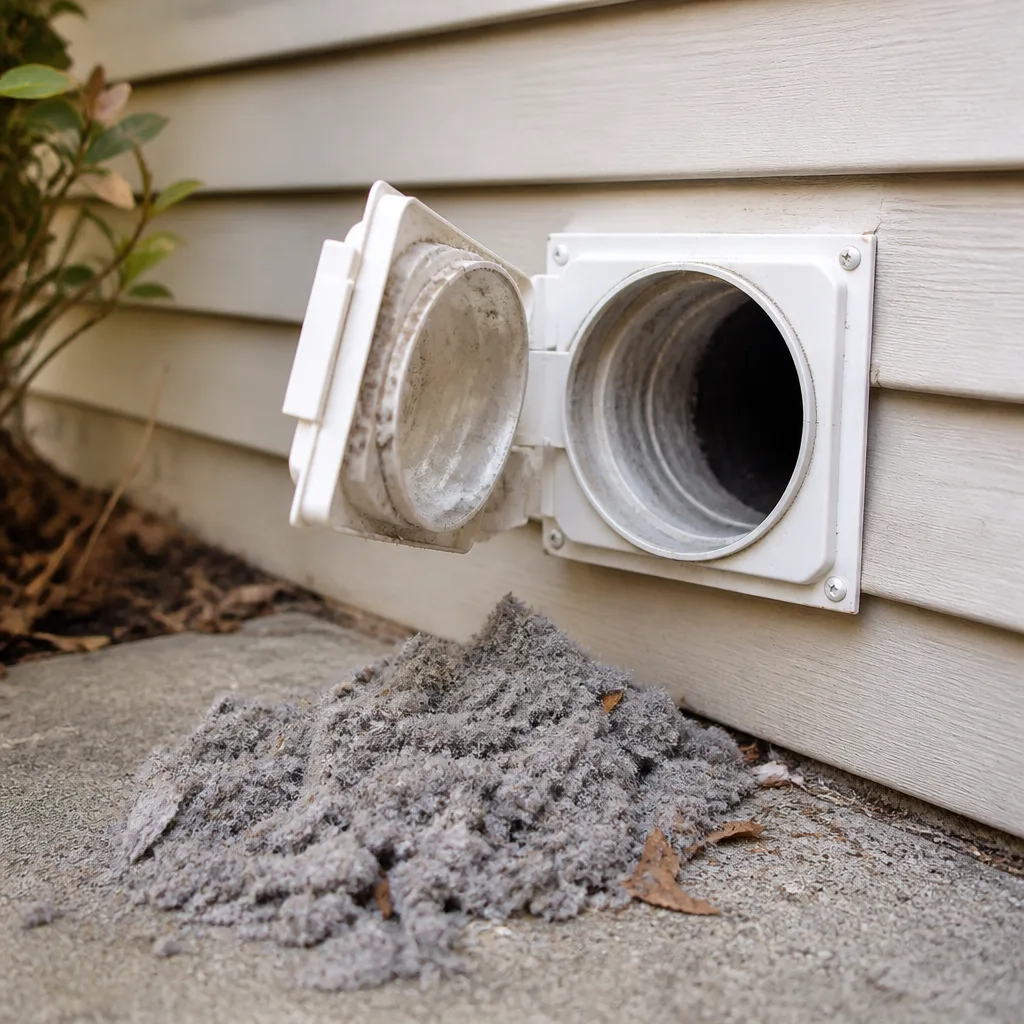 Dryer vent cleaning
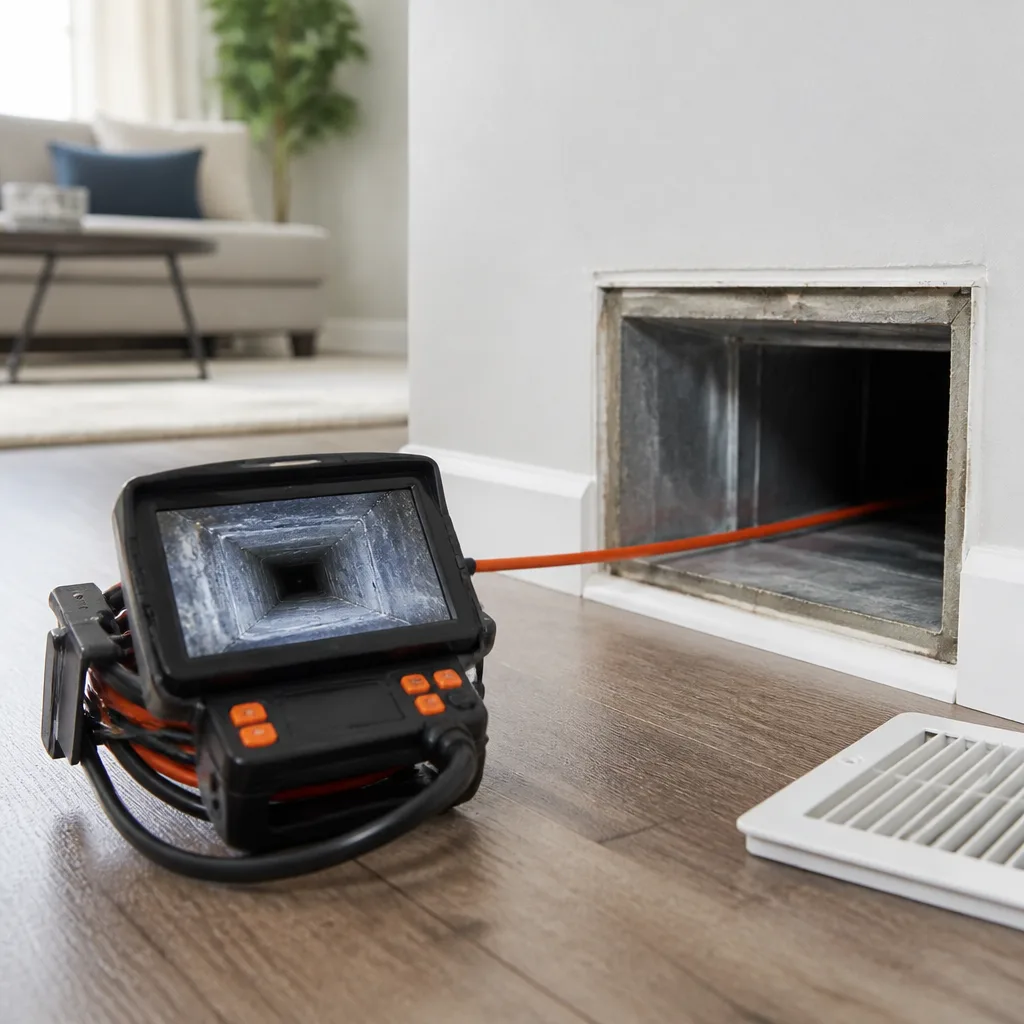 Camera inspection
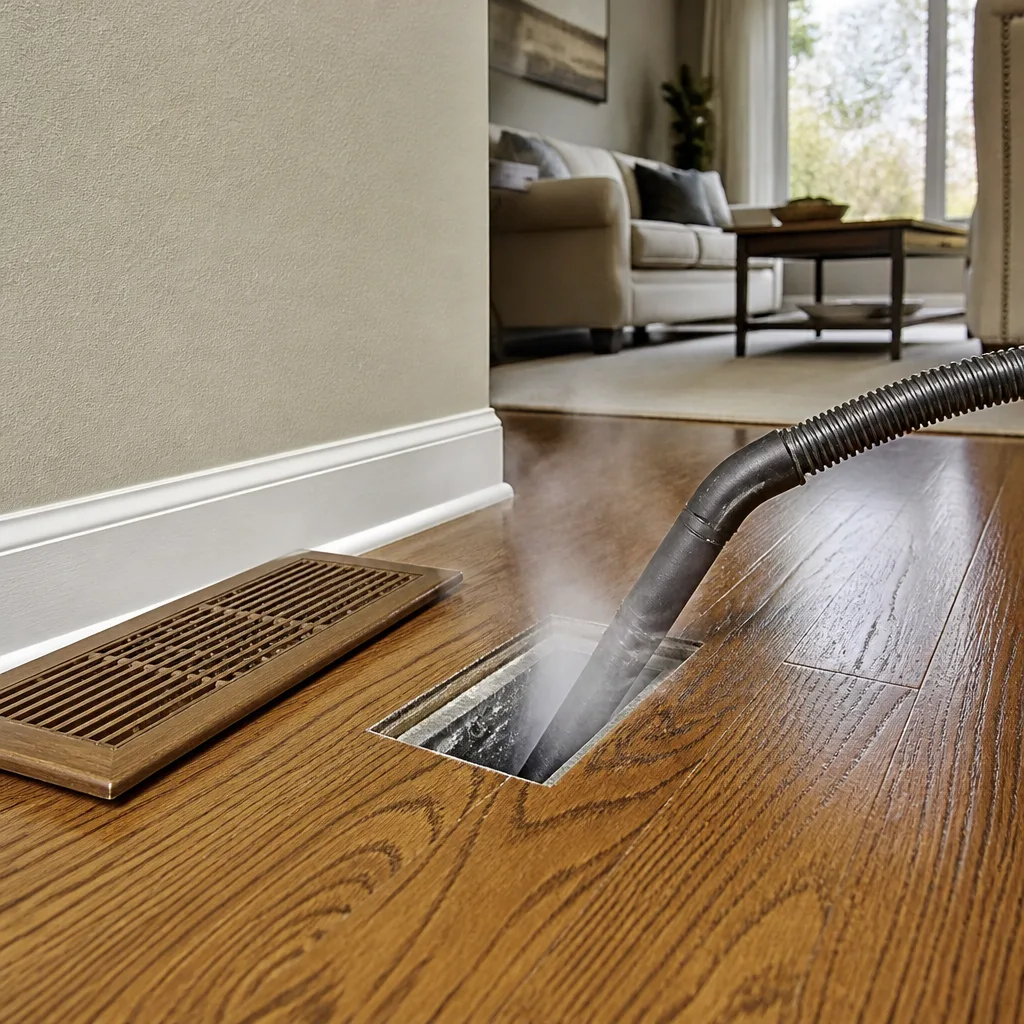 Sanitizing & deodorizing
Whole-system duct and dryer vent check with before-and-after photos - you see exactly what came out of your vents
That "$99 whole-house special" is a bait ad - the real number appears once they are in your hallway, or the "clean" is a shop-vac at the register. We photograph the inside of your ducts before and after instead.
Air Duct Cleaning Warning Signs: A Riverview Homeowner’s Reference Guide
Most duct warning-sign articles tell you to look for dust on the ceiling. You already know about dust. The signals that matter in a Riverview home are quieter and more specific: a musty smell that shows up in the back bedroom only when the AC kicks on, a guest room that runs three degrees warmer than the hallway, a hairline of dark staining at the edge of a supply register. A smell that lives in one room and appears on a schedule isn’t a “Florida thing.” It’s a localized contamination signal that points to a specific duct zone, and if you can describe it precisely, you’ll get a far better diagnosis. This guide teaches you to read those indirect signals before a technician ever walks through the door.
Quick Answer
The most reliable air duct cleaning warning signs in Riverview are: an odor that appears or strengthens when the AC runs, room-to-room temperature swings of more than a few degrees, dust that returns within days of cleaning, condensation or rust on registers, and allergy-type symptoms that track AC runtime rather than pollen season. Any single one of these is worth investigating. Two or more pointing at the same section of the house almost always means contamination, leakage, or both in that zone.
Styles & brands we work with
- Whole-home duct cleaning
- Dryer vent cleaning
- Camera inspection
- Sanitizing & deodorizing
Table of Contents
- Room-by-Room Symptom Mapping: Find the Source Zone
- Dust, Mildew, or Dirty Sock: Three Odors, Three Problems
- Inconsistent Room Temperatures: Leak or Contamination?
- Symptoms That Track AC Runtime, Not Pollen Season
- What Your Registers Are Telling You
- The Return Side: The Warning Sign Most Homeowners Overlook
- Why Riverview Homes Show These Signs Differently
- When to Call a Professional
Room-by-Room Symptom Mapping: Find the Source Zone
Before you touch a register or call anyone, build a simple map of your home’s symptoms. A central duct system in a Riverview house branches through a trunk line, and each branch feeds one or two rooms. When contamination or leakage exists in one branch, symptoms cluster in the rooms that branch serves. That clustering is diagnostic information you can hand to a technician, and it shortens the investigation.
Here’s the sequence we recommend to homeowners in Riverview before any air duct cleaning estimate:
- Set up your baseline. On a mild day, walk every room and note temperature, any smell, and whether the register feels weak, strong, or average.
- Run the system with the house closed. Let the AC run through a full cycle. Walk the same rooms again while it’s running, not after it stops.
- Record where symptoms peak. Note which rooms smell strongest, which run hottest, and which registers have visible condensation or staining.
- Group the rooms by zone. Rooms on the same side of the house, or served by the same trunk, are usually one zone. If two or three rooms share symptoms, that branch is your suspect.
- Note the pattern in words. “Back two bedrooms smell musty 10 minutes after the AC starts, guest bath is fine” is a far more useful sentence to a technician than “the house smells weird.”
In our experience, the majority of one-room odor complaints in Riverview turn out to be a single contaminated branch or a disconnected joint behind one register box, not a whole-system problem. Finding that zone first changes the scope of the recommendation, sometimes dramatically. If you’ve already noticed whole-house symptoms, the broader picture is covered on our air duct cleaning page.
Dust, Mildew, or Dirty Sock: Three Odors, Three Problems
Odor is the highest-value diagnostic a homeowner can gather, and most people describe every duct smell as “musty.” That word hides three distinct problems with three different fixes. Learn to tell them apart and you’ll know roughly what kind of remediation you’re walking into.
- Dry dust odor. A stale, papery smell, strongest right when the system starts. This usually means settled particulate in the ducts and on the blower, often with a filter that’s been running too long. It’s the most common finding and the most straightforward to correct with mechanical cleaning.
- Mildew smell. Damp, earthy, like a towel left in a gym bag. In a humid climate like Riverview’s, this points to moisture somewhere in the system: a sweating plenum, a humid return path, or condensation inside an insulated duct. Cleaning alone doesn’t solve a moisture problem, which is why we run negative-air HEPA filtration during remediation work and sometimes recommend a filtration upgrade afterward.
- Dirty sock syndrome. A sharp, sour, gym-sock odor that hits within seconds of startup and fades as the system runs. It’s classically linked to microbial growth on the evaporator coil and the interior surfaces just downstream of it. It signals that cleaning needs to include the coil and the immediate duct surfaces, not just the branch runs.
The pattern matters as much as the smell. A smell that fades as the system runs points toward surface growth that dries out. A smell that grows stronger the longer the system runs points toward a continuing source, like a wet section of duct or an intake near a moisture source. Either way, an odor is a reason to schedule a professional evaluation rather than a reason to buy a scented product. Our duct cleaning in Riverview team treats odor complaints with equipment like Nikro negative-air units and Abatement Technologies air scrubbers precisely because particles and odor travel together.
Inconsistent Room Temperatures: Leak or Contamination?
Most homeowners assume a room that won’t cool is a contamination problem. Often it’s a duct integrity problem instead, and the two need different work. A room running warm is a leakage or balance warning sign first. Contamination becomes the likelier explanation when the temperature issue travels with an odor or a visible register signal.
Here’s how to reason through it:
- Warm room, no odor, no staining. Lean toward leakage or a balance problem. A joint may have separated in the attic or a flex run may be kinked or crushed. That’s repair work, not just cleaning, and it’s one reason we keep dryer vent cleaning and duct repair under one roof: we repair what we find rather than handing you off to a second contractor.
- Warm room with a smell when the AC runs. Lean toward contamination plus restriction. Settled debris narrows a branch and reduces airflow, and the smell points to the source. Cleaning plus inspection usually sorts it out.
- Multiple rooms warm on the same side of the house. This is usually a trunk or plenum issue, and it’s structural, not cosmetic. A duct integrity inspection comes before any cleaning.
- A room cool but stuffy. The air reaches the room but the return path is pulling from elsewhere, so the room doesn’t actually exchange air. Return-side problems are covered below.
Bring a cheap thermometer to the diagnosis. A reading of the register outlet and the room center, taken at the same moment, tells a technician far more than a general complaint about comfort. In Riverview, where the cooling season runs long and the system runs hard, temperature complaints surface faster than in cooler markets, and that makes them one of the most common reasons people call us.
Symptoms That Track AC Runtime, Not Pollen Season
Seasonal allergy symptoms follow the calendar. Indoor air-quality symptoms follow the system. If your nose runs, your throat itches, or your eyes water when the AC starts and clears when it stops, you’re describing a mechanical exposure, not a pollen exposure. That distinction is the diagnostic most physicians don’t ask about, and it’s the one that matters most for a duct investigation.
Track it for two weeks. A simple notebook or phone note works:
- Note the time the AC turns on and off each day.
- Note when symptoms start and stop, in the same timeline.
- Note which rooms you were in.
- Note whether opening windows changes anything (usually it does not, if the source is the ducts).
- Note the filter change date and what kind of filter it is.
If symptoms and AC runtime line up over two weeks, the next step is an inspection. A high-efficiency filter is a useful tool, and we install Honeywell and Aprilaire filtration products for homeowners who want that layer after cleaning, but a filter catches what passes through it. It doesn’t remove what’s already settled in the ducts, and it doesn’t fix a leak. For existing contamination in a Riverview home, mechanical cleaning with a Rotobrush rotary-brush system is the starting point. That’s a contact method: the brush physically scrubs the duct wall rather than relying on air pressure alone, which matters when the contamination is adhered rather than loose.
What Your Registers Are Telling You
Registers are the visible end of the system, and they show signals that are easy to read once you know them. Take a phone flashlight to every supply and return grille in the house. Three visual signs carry most of the weight.
- Black soot-like edging around the vanes or the frame. Dark staining at the edges of a register usually means fine particulate is being pushed through a gap and depositing right at the point of pressure loss. It often signals a poorly sealed boot or a duct box that’s pulling air from the attic or wall cavity instead of the trunk. That’s leakage with an air-quality consequence.
- Condensation on the grille or the drywall around it. Water on the surface means the register assembly is running below the dew point. In a Riverview summer, an uninsulated or poorly sealed boot will sweat, and constant dampness at a register creates a moisture reservoir for microbial growth. You cannot clean your way out of a surface that keeps getting wet.
- Rust on a metal diffuser. Rust confirms a long-term moisture cycle. It’s often the earliest visible sign of a humidity problem that’s been running for years, and it raises the question of what the interior of that duct looks like.
Also check the filter slot at the same time. A filter that’s gray in a few weeks, or that shows a dark streak where air bypasses the frame, is a warning that the system is getting particulate it shouldn’t. And while you’re inspecting, apply the same eye to the Riverview home’s dryer vent, which shows lint and heat signals that matter for safety far more than comfort. That’s why we offer dryer vent cleaning as a standalone service, not an add-on.
The Return Side: The Warning Sign Most Homeowners Overlook
Most homeowner inspection stops at the supply registers. The return side is where the system breathes in, and it carries more contamination by volume than any supply branch. In our experience, a return-side problem is the single most common finding in a Riverview home that “smells dusty but the vents look clean.”
Look for these signals at each return grille:
- A filter that loads unevenly: dark on one side, clean on the other, means air is bypassing the filter at the frame.
- Visible dust on the return grille’s inside face right after a filter change.
- A whistling or sucking noise at the return. That’s a sign of restriction or a missing filter frame.
- A return located in a hallway next to a bathroom door. Humidity transfer in this layout is common, and a return that pulls damp air shortens the life of the filter and the coil.
The right fix starts with cleaning the return and the plenum mechanically, then making sure the filter frame seals. That last step is where a filtration upgrade does genuine work. We install Aprilaire and Honeywell filter housings because a properly sealed frame closes the bypass path, and the filter then performs the job it was bought to do. Cleaning, sealing, and filtration is the sequence that holds; cleaning alone against a leaking return frame doesn’t.
Why Riverview Homes Show These Signs Differently
Riverview’s cooling season is long and the humidity is high, which changes the mix of problems a duct system develops. A home in a cooler market might run the furnace for four months and the AC for two. Most Riverview homes run the AC for much of the year, which means the duct system is moving air constantly and the coil is wet for most of that time. That combination produces three local patterns worth knowing.
First, microbial-type odor complaints are more common here than dust-type complaints, because the system’s wet surfaces stay wet longer. That’s why we use negative-air HEPA filtration with Nikro units and Abatement Technologies air scrubbers during remediation work: remediation-grade equipment in a residential setting keeps particles contained during cleaning rather than spreading them through the house. Second, duct leakage has air-quality consequences year-round: an attic duct in Riverview under a summer sun runs in high heat, and a disconnected joint pulls hot humid attic air directly into the supply stream. Third, new construction and renovated homes in and around Riverview often have flex duct routed through tight spaces where a crushed run is easy to miss, so a temperature complaint isn’t automatically a cleaning job.
The practical takeaway: in Riverview, treat odor as the primary signal, moisture as the likely root cause, and temperature as a reason to inspect for leakage before assuming contamination. That sequence saves homeowners from paying for work that doesn’t match the problem.
Common Mistakes to Avoid
- Buying a scented product to cover a smell. A scented spray or an ozone device masks the signal without removing the source, and it makes the next diagnosis harder. Find the zone first, then treat it.
- Assuming a low price means a small job. A single discount figure for a whole house usually means a single blower pass with no mechanical contact on the duct walls. Ask what equipment will be used to scrub the duct wall, not just what will move air through it.
- Skipping the filter frame inspection. Replacing a filter in a frame that doesn’t seal is money spent on air that never touches the filter. Check the seal, then the media.
- Treating the supply side only. The return and plenum typically carry more contamination than the supply branches, and a cleaning that skips them doesn’t fix the source.
- Waiting for visible dust before acting. Visible dust on a ceiling is a late signal. Odor, temperature variance, and register staining show up first.
- Ignoring condensation at a Riverview register. In this humidity, a sweaty grille is a moisture problem, and moisture problems get worse rather than settling down. It’s worth an inspection.
- Treating a dryer vent as a comfort issue. Lint buildup in a dryer vent is a fire-safety matter, not an airflow convenience, and it belongs on the warning list alongside duct signals.
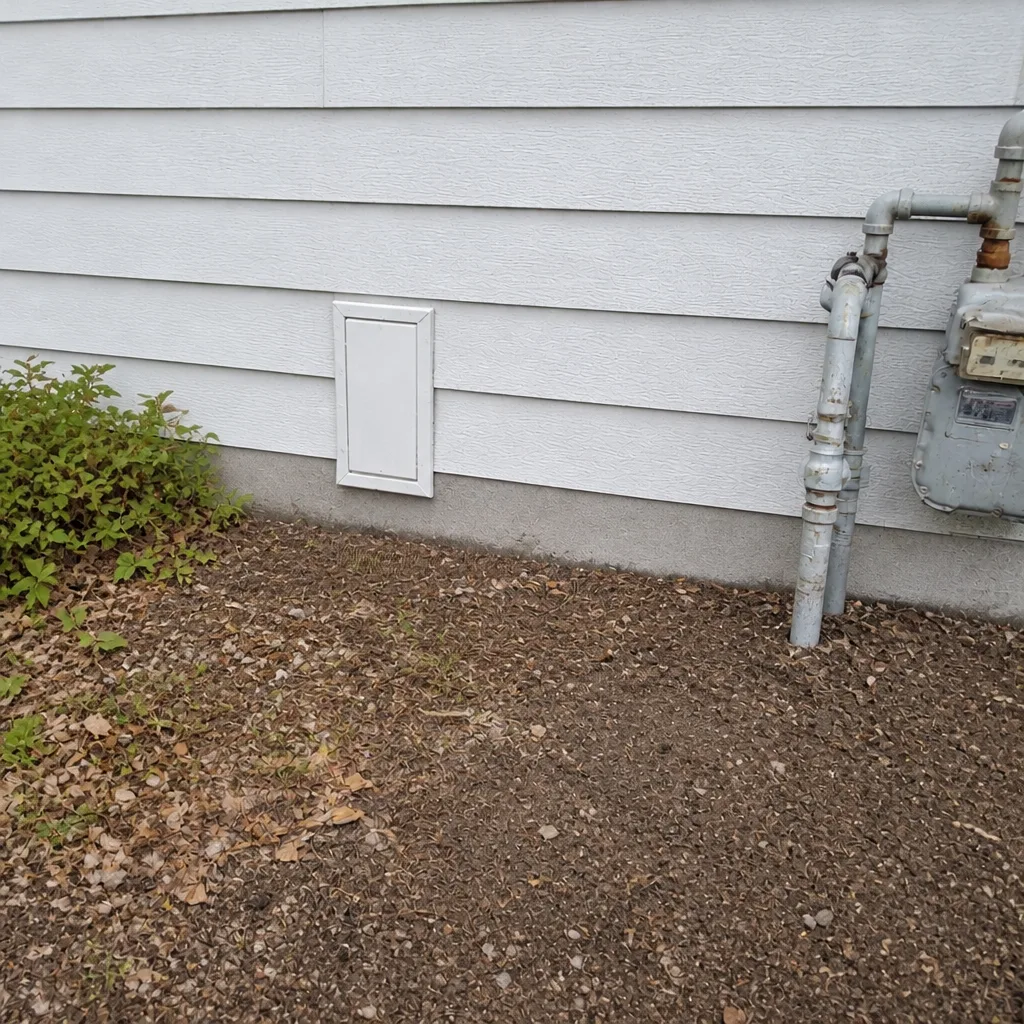
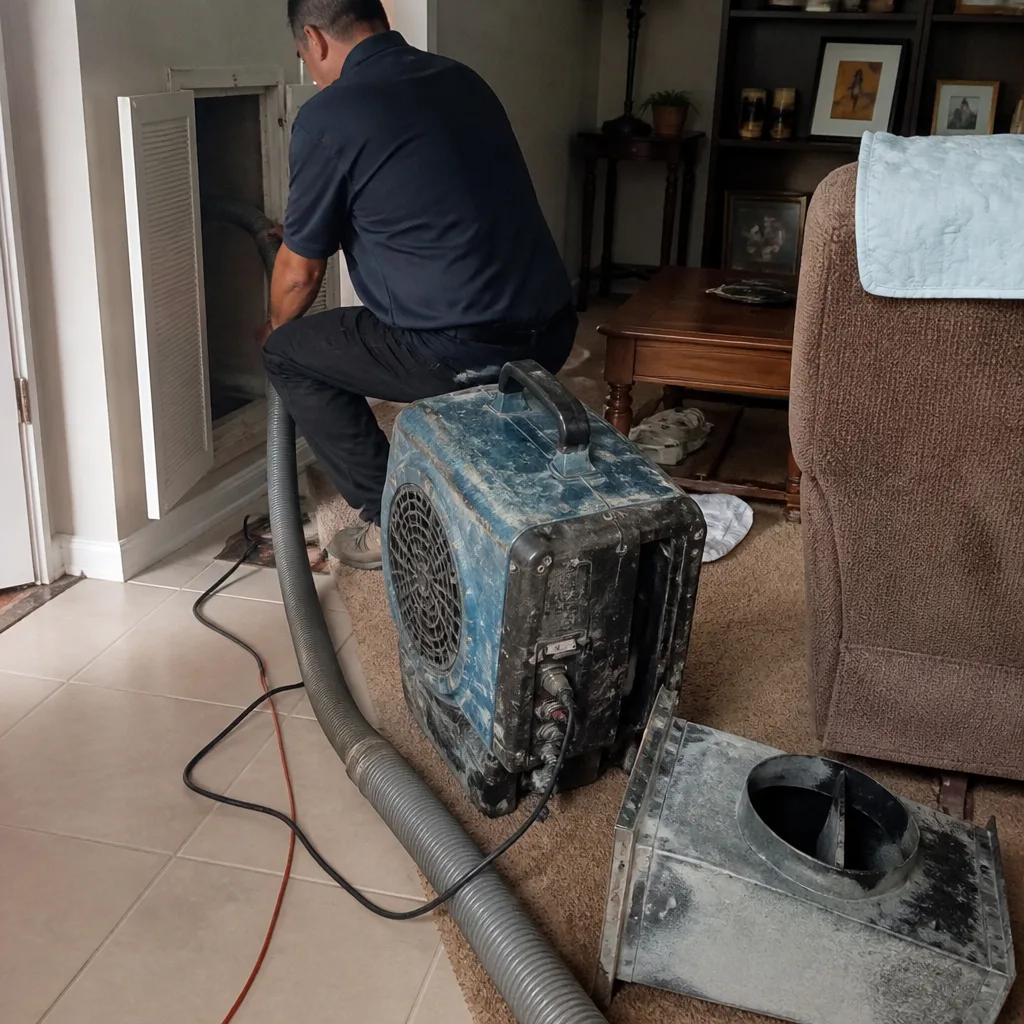
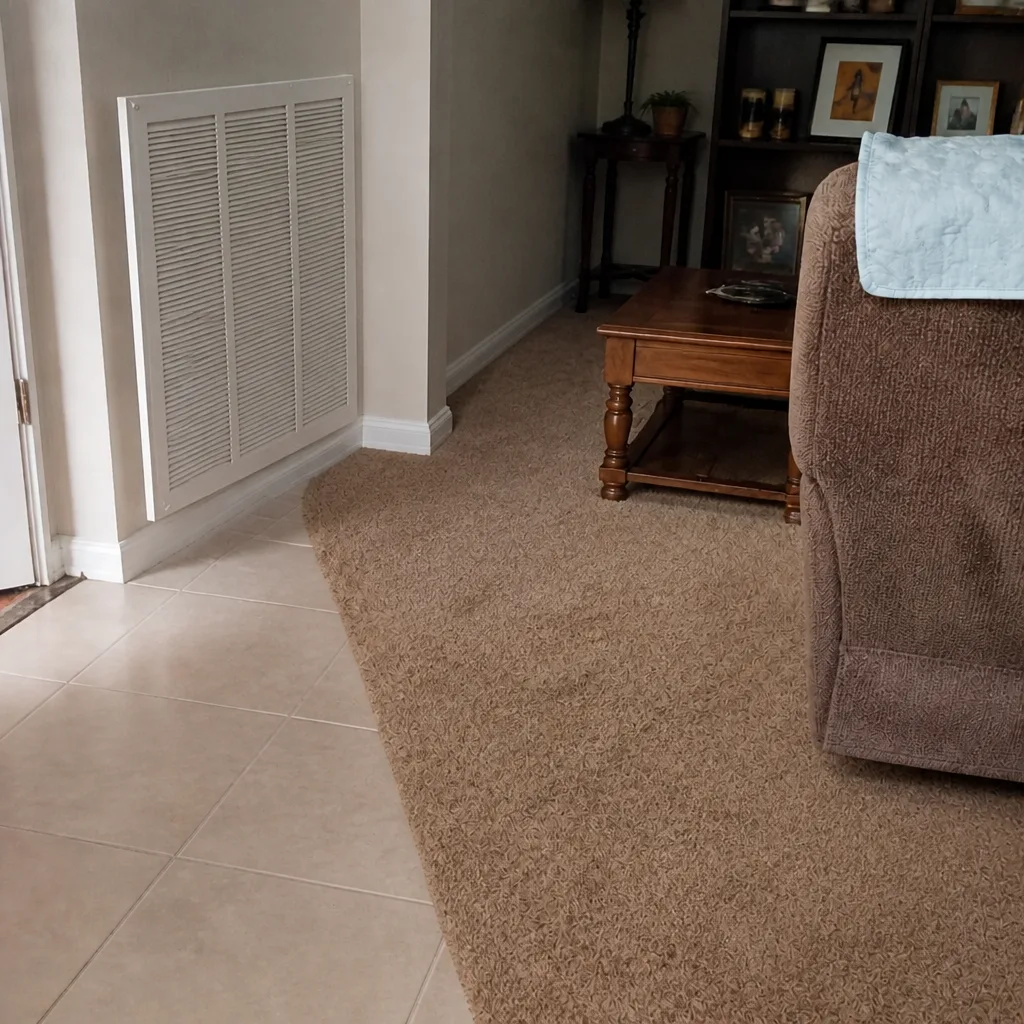
See the difference
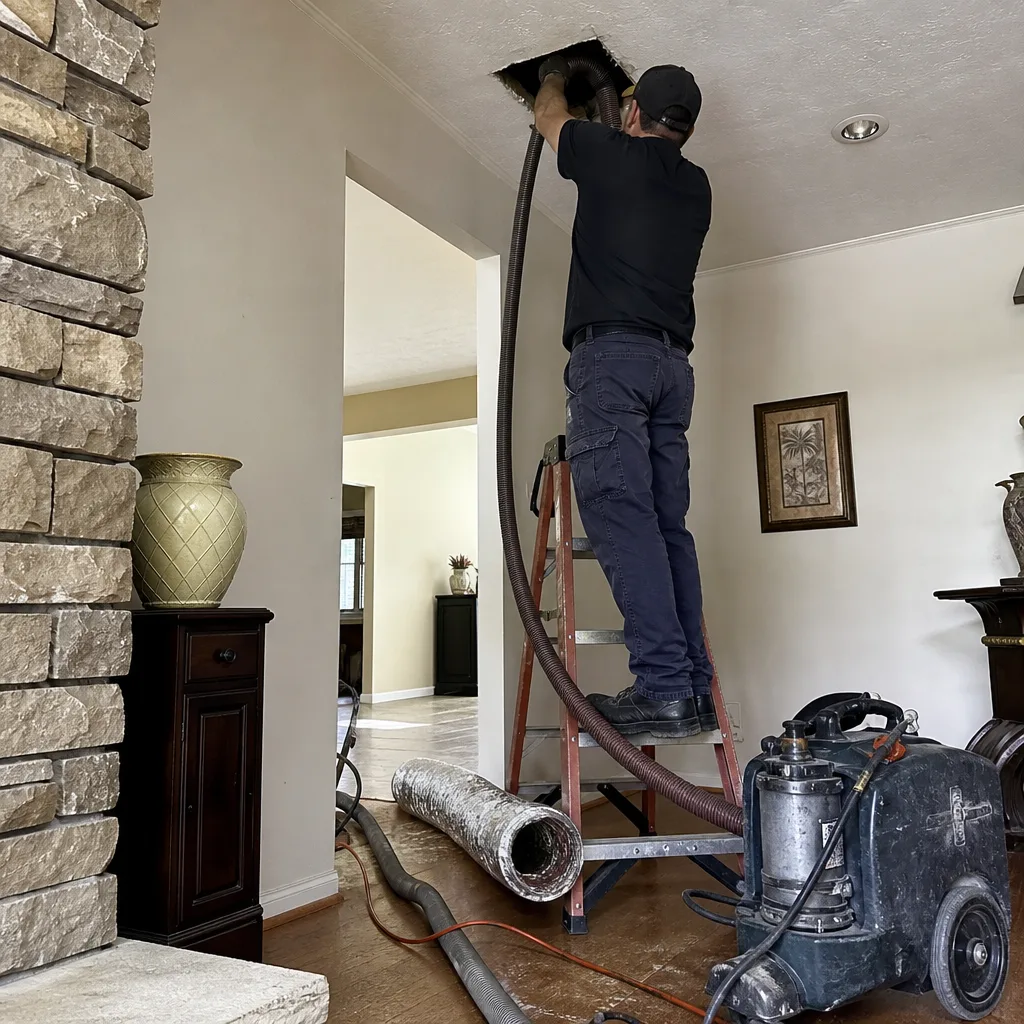 Before
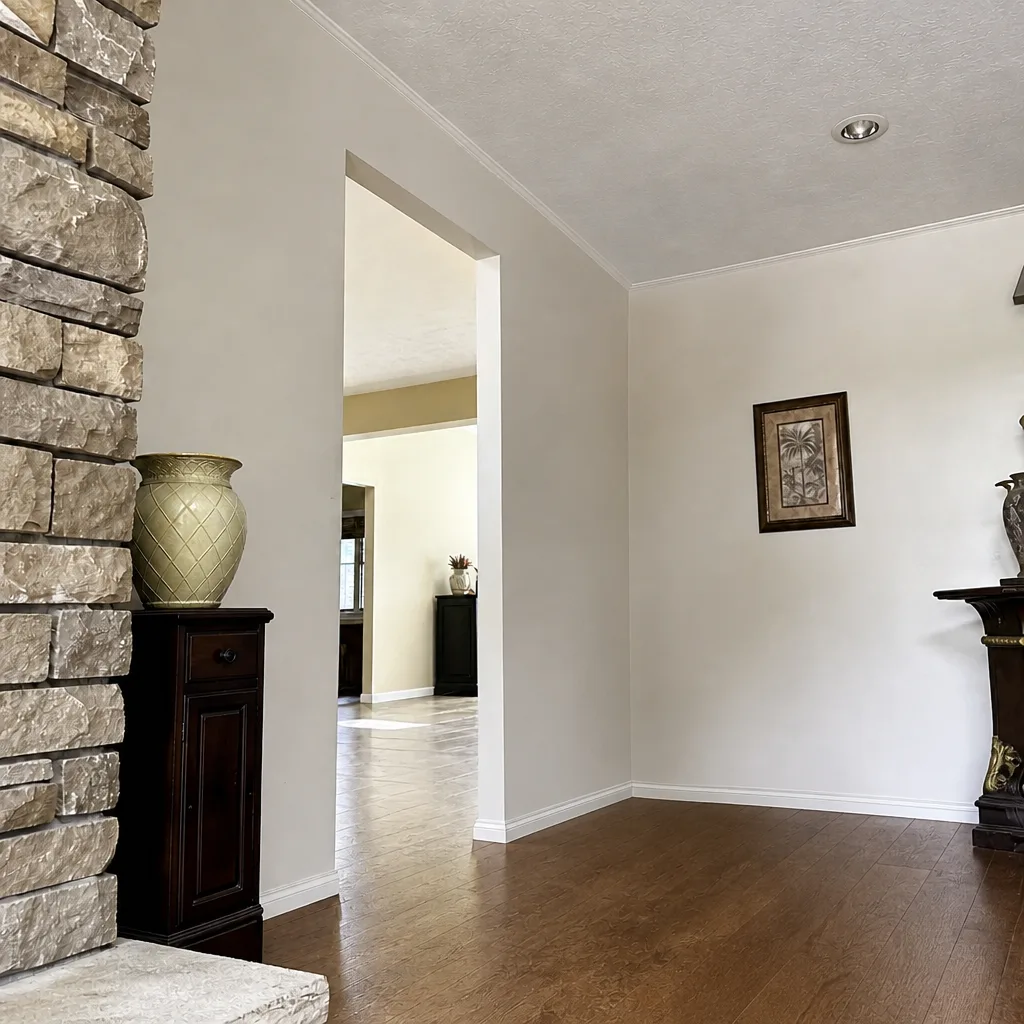 After
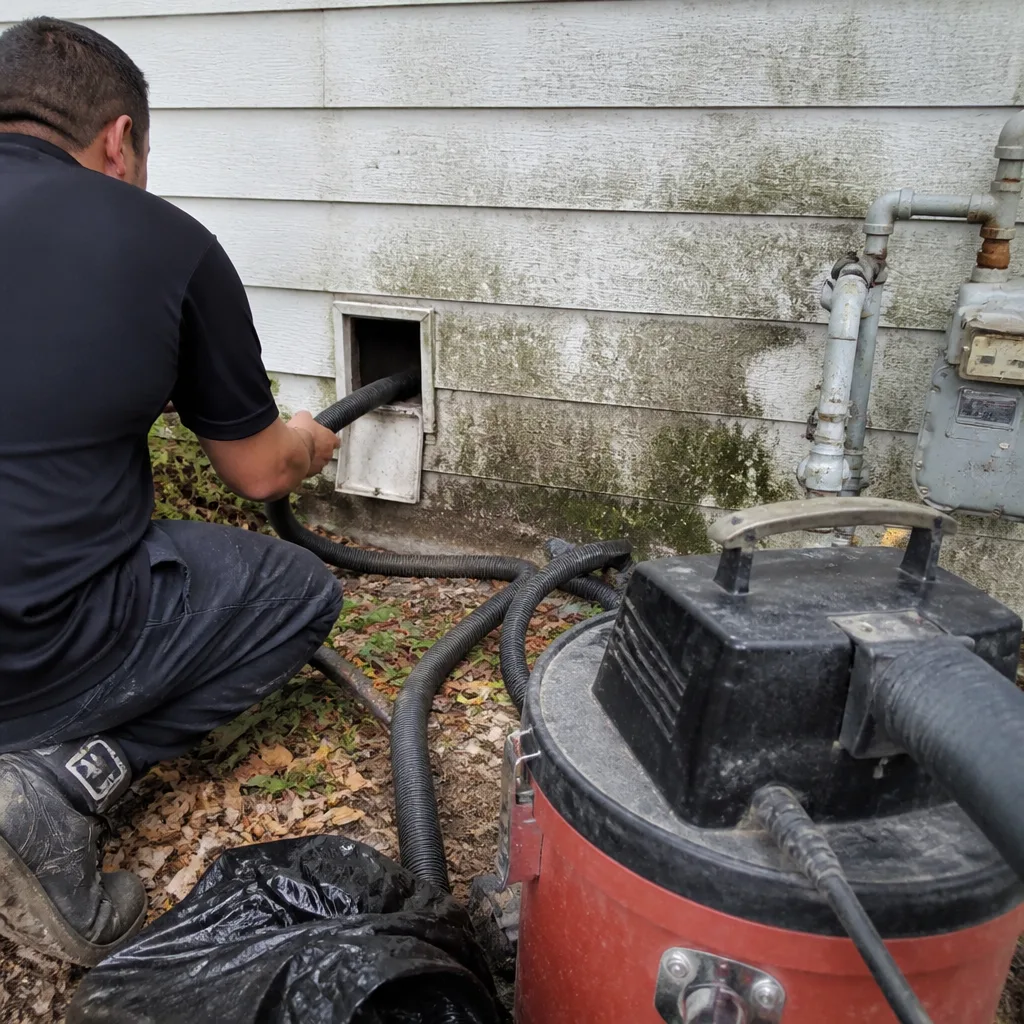 Before
 After
 Before
 After
When to Call a Professional
Call when you’ve mapped a symptom zone and it doesn’t resolve on its own. Specifically: an odor that persists for more than a couple of weeks, condensation or rust at any register, allergy-type symptoms that track AC runtime across two weeks of tracking, temperature variance between rooms that you can measure with a thermometer, or a filter that loads up unusually fast after a change. Any one of these is a reason to get an inspection. Two or more in the same zone is a strong reason. Duct Cleaning Riverview offers free estimates in Riverview for homeowners who want a diagnosis without guesswork. Call (866) 293-1514. We answer 24/7. Fast dispatch from 7am to 7pm, Sunday through Friday.
Frequently Asked Questions
Odor that tracks AC runtime, room-to-room temperature swings, and register staining show up before visible dust. A smell that peaks when the system starts, or that only appears in two or three rooms, is the earliest and most useful signal in a Riverview home because it points to a specific zone. Map the symptoms for a week, then have that zone inspected.
Typical whole-system cleaning ranges are what most homes should budget for, and the written estimate sets the final price. Be wary of a very low headline figure: that’s often the per-vent teaser that grows after the technician is on site. We quote one flat price per system before work begins, with no per-vent pricing and before-and-after photos of your own ducts. Call (866) 293-1514 for a free estimate.
Cheaper quotes usually describe a blower pass with no mechanical contact on the duct walls. A blower moves loose air through the system, but it doesn’t scrub adhered contamination, and it doesn’t address a leaking return frame or a wet boot. Ask two questions of every quote: what equipment touches the duct wall, and how will the work be documented. If the answer is vague, the price is saving you effort on the wrong job.
Ask for before-and-after photos of your own ducts, not stock images. A mechanical cleaning with a rotary-brush system leaves a verifiable difference in the duct interior, and a contractor who uses that equipment can show it. We clean with Rotobrush rotary-contact extraction specifically because the result is visible and documentable. Call (866) 293-1514 and ask what the photo record will include.
No. A musty smell can come from a wet boot, a sweating plenum, a damp return path, or microbial growth on the evaporator coil, and the fix differs in each case. What matters is whether the smell appears at startup and fades (surface growth) or grows stronger the longer the system runs (an active moisture source). That pattern tells a technician where to look before the equipment comes out.
There’s no universal interval. The signals in this guide matter more than a calendar. Homes with pets, recent renovation, or a history of moisture at the registers tend to need attention sooner. A home that’s clean, sealed, and well filtered can go much longer. Let inspection drive the schedule rather than the other way around.
The Bottom Line
The warning signs worth acting on are the indirect ones. Odor that tracks the AC, temperature swings that cluster in a zone, symptoms that follow runtime instead of pollen, and moisture at the registers all point to a specific problem before anything visible appears. Map your symptoms by room, learn to tell the three odor types apart, and treat condensation and rust as a moisture signal rather than a cosmetic issue. The technicians at Duct Cleaning Riverview use Rotobrush rotary-brush extraction, Nikro and Abatement Technologies filtration equipment, and Honeywell and Aprilaire filtration products because the fix has to match the finding. When you’re ready to stop guessing, call (866) 293-1514. We answer 24/7. Fast dispatch from 7am to 7pm, Sunday through Friday.
Written by the team at Duct Cleaning Riverview.